Homelessness is a heartbreaking reality that affects 37,000 people in Spain. Within this group, LGTBIQA+ people face additional challenges that make their situation even more difficult.
LGTBIQA+ people are more likely to experience residential exclusion and homelessness in their lives due to a number of factors. The lack of acceptance of non-normative identities by society makes everyday processes, such as finding employment, more difficult. According to the European Fundamental Rights Agency (FRA), 77% of trans women in Spain have experienced discrimination when seeking employment. This creates significant barriers to their economic stability, which can make it difficult to access adequate housing.
In addition, many LGTBIQA+ individuals are kicked out of their family homes at an early age due to lack of acceptance of their sexual identity or orientation. Family rejection leaves these individuals without support networks and exposes them to an increased risk of ending up living on the street. According to FRA data, approximately 1 in 3 LGTBIQA+ people have experienced homelessness at some point in their lives.
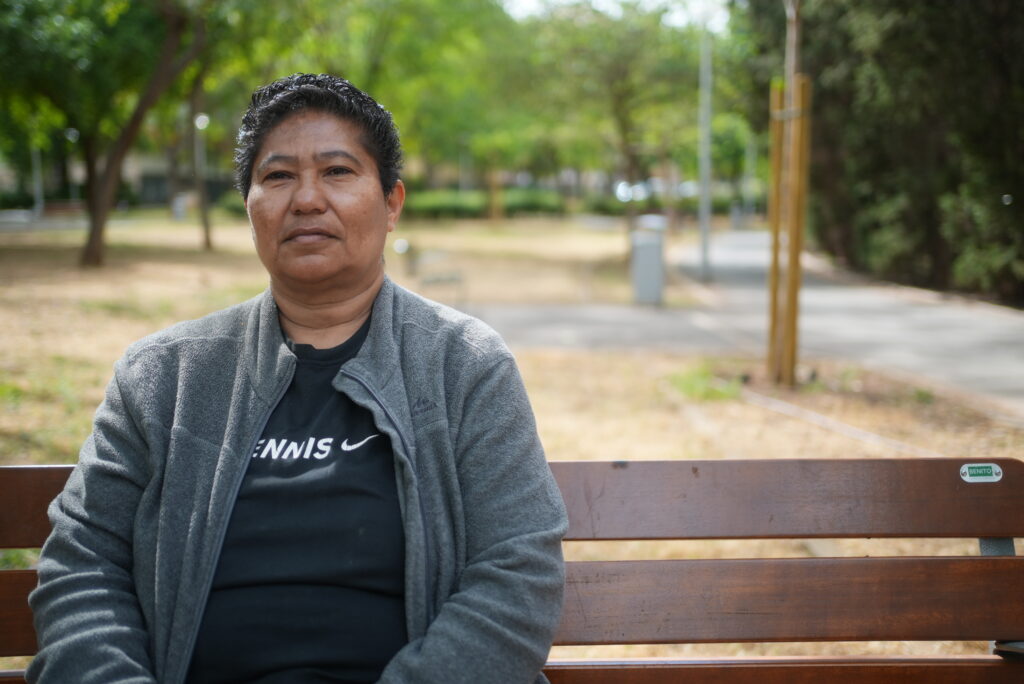
Eva's story stands out as an inspiring example of resilience. Eva managed to overcome difficulties and regain her autonomy to develop her life project. She had to flee her country because of her sexual orientation, arrived in Spain without a place to call home and without a stable support network.
Housing rights: support to achieve their life projects
However, Eva found the help she needed to start building her support network and entered Derechos a la vivienda, the innovation program of HOGAR SÍ and Asociación Provivienda. Through this deinstitutionalization program, she was able to access safe and stable housing, as well as comprehensive services that support her in her quest for autonomy for good community living. For LGTBIQA+ people, this means ensuring a safe environment, where they do not face discrimination or LGTBIphobia when accessing housing.
This approach seeks to replace institutions with inclusive communities, where people living on the street can access adequate and stable housing, as well as a wide range of services and supports. The line of self-directed supports in which Eva participates consists of a personalized model of choosing and managing her own resources according to her needs, such as a deposit for a room, a driver's license to facilitate access to a job or immigration paperwork, among others. The participants are people over 18 years of age who are homeless for a period equal to or less than three months and/or who are being served by the network of public services for homeless people of the public administrations.
The importance of community
Eva's experience not only shows the importance of deinstitutionalization and the right to housing, but also being able to enjoy a full life in community. With the right support and an inclusive community, people experiencing homelessness, especially those belonging to the LGTBIQA+ community, can find a way to face some challenges and build a better future.
It is critical that policies and programs aimed at addressing homelessness recognize and address the specific needs of LGTBIQA+ persons. This involves implementing laws and policies that prohibit discrimination based on sexual orientation or gender identity in accessing housing. It is also necessary to provide adequate support programs and resources that promote inclusion and equal opportunities for LGTBIQA+ people experiencing homelessness.
Together, we can help build a world where all people, regardless of sexual orientation, gender identity, ethnicity, race, religion or any grounds for exclusion, have a safe and dignified place to call home. Through our collective commitment, we can achieve a future where homelessness and discrimination are a thing of the past.
Salvi Macías Parrado, Housing Rights communication technician.