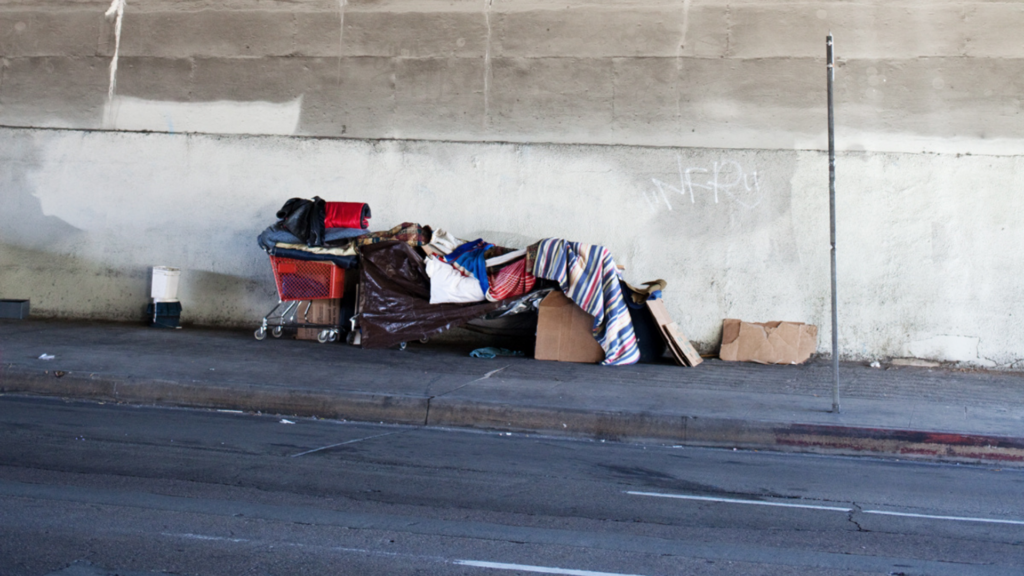
The use of the word "homelessness" has become increasingly common in recent years. At Provivienda and HOGAR SÍ we use this word, which has already been recognized as a valid neologism by the Fundación del Español Urgente (Fundéu), although it has not yet been added to the dictionary by the RAE, to describe a challenging and complex social reality that affects some 37,000 people in Spain1: homelessness.
Referring only to "homeless people" makes invisible the social, economic and political factors that cause the situation of these people, while at the same time we hold them responsible for issues that do not depend solely on them. Beyond the individual characteristics or particular conditions that lead a person to live on the street, we understand that there are different factors that determine the circumstances that lead a person to end up in this situation. Homelessness is a multidimensional problem that requires comprehensive solutions and political and social transformations. Homelessness is not a personal choice, it is a structural problem that, unfortunately, affects all societies.
A rights-based approach
Homelessness affects not only the right to housing, but also the right to health and employment. It is a situation that damages people's dignity and freedom, while exposing them to a series of dangers derived from life without a home. It can also have consequences in terms of mental and physical health, security and privacy, as well as access to essential opportunities and services.
Homeless people are more likely to suffer aggression, discrimination and social isolation, which can perpetuate their situation of vulnerability and residential exclusion. Half of all homeless people have experienced hate crimes. This violence often remains hidden except in the most extreme cases. It is an insidious and continuous violence towards homeless people that has a high impact on the way these people perceive their own lives. Aporophobia is the hatred or rejection of poverty and we must combat it.
Moreover, the latest INE data on homelessness are alarming in terms of gender-based violence: 22% of women say that the main reason they left home and ended up in a situation of homelessness is that they or their children suffered violence. Homelessness is a serious denial of a basic right, it cannot be a way out for anyone, much less for situations of violence against women.
What is not named does not exist
Language constructs reality, so it is important to use the word homelessness because it frames a phenomenon that is avoidable. Public administrations must promote and lead programs so that homelessness ceases to be a reality perceived as inevitable. In doing so, in addition to fostering the conversation on how to guarantee multiple rights, we are promoting new narratives and banishing other words that have traditionally been used to describe people in this situation and that stereotype, objectify, dehumanize and detract from the dignity that every human being deserves. In this way we put the focus on the structural problems and the temporality of the situation, which has a solution.
The use of the word "homelessness" can help to promote greater unity among the community and together seek innovative solutions from a rights-based approach, based on housing and people-centered methodologies that solve homelessness in a coordinated and effective way. Of course we are serious!
- However, this figure could be 30% higher, according to estimates by HOGAR SÍ, since it does not include those people who live permanently on the street, only those who go to centers.
- Data source: INE.