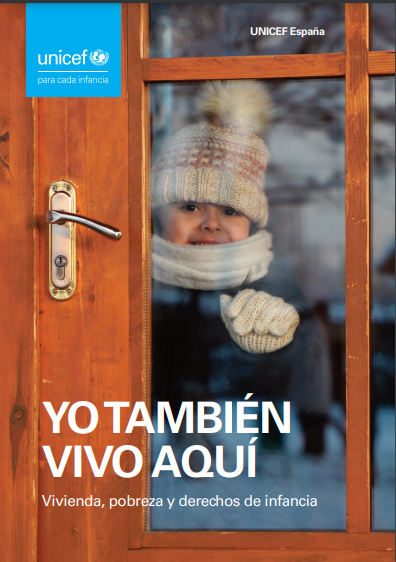
UNICEF Spain has taken a crucial step towards making visible a latent but forgotten reality: the situation of homeless youth. Under the title Yo también vivo aquí, this report reveals alarming data on the relationship between housing, poverty and children's rights in our country. HOGAR SÍ and Asociación Provivienda have collaborated in the elaboration of this report within the framework of the innovation program H4Y FUTURO.
One of the groups in a particularly vulnerable situation in terms of access to decent housing is that of young people in foster care: young boys and girls who have lived under the protection of the residential or family foster care system and who, upon reaching the age of majority, are considered adults and must continue their journey outside the system. In this transition to adulthood, the risk of residential exclusion increases and, frequently, a large number of these young people end up in a situation of homelessness.
Of the 6,036 people between 18 and 29 years of age who suffer from youth homelessness in Spain (INE, 2022), 11% reported having ended up in a situation of homelessness after leaving a juvenile center. It is urgent to implement social policies that address the harsh reality of youth homelessness, especially in those young people coming from the juvenile protection system.
Moreover, it can be argued that migrants face additional challenges that make their situation even more difficult. Young migrants, such as Mohamed who participates in H4Y FUTURO, encounter various difficulties such as lack of family and social support, language barriers, racism and residential discrimination or an irregular administrative situation. All this, added to the lack of stable economic resources, can lead many of these people to a situation of homelessness as the most extreme consequence of residential exclusion.
The aim of this project is to avoid chronification and to achieve the exit from the situation of homelessness when it is still initial. The differentiating feature with respect to other programs of transit to autonomy is that it works with those young people who are left out of the existing resources either because of insufficient places or because there are no services that are adapted to these people with more complex situations.
I live here too: housing, poverty and children's rights
The UNICEF report exposes how housing has a direct impact on child poverty levels in Spain. Rising prices and lack of access to decent housing subject children to extreme conditions, affecting their physical and mental health, their education and their opportunities for the future.
José María Vera, executive director of UNICEF Spain, points out that the rate of child poverty in our country is the highest in the European Union and that housing is becoming a determining factor in this problem. However, children are invisible in public policies related to housing.
The report includes recommendations for incorporating children's rights into housing policies, with the aim of ensuring that every child and adolescent in our country has access to decent and adequate housing. Among these recommendations are an increase in public housing, assistance for vulnerable families, improved data on the situation of children and adolescents, and the development of strategies to eradicate substandard housing.
Read the full report here to learn more about this reality and possible solutions.