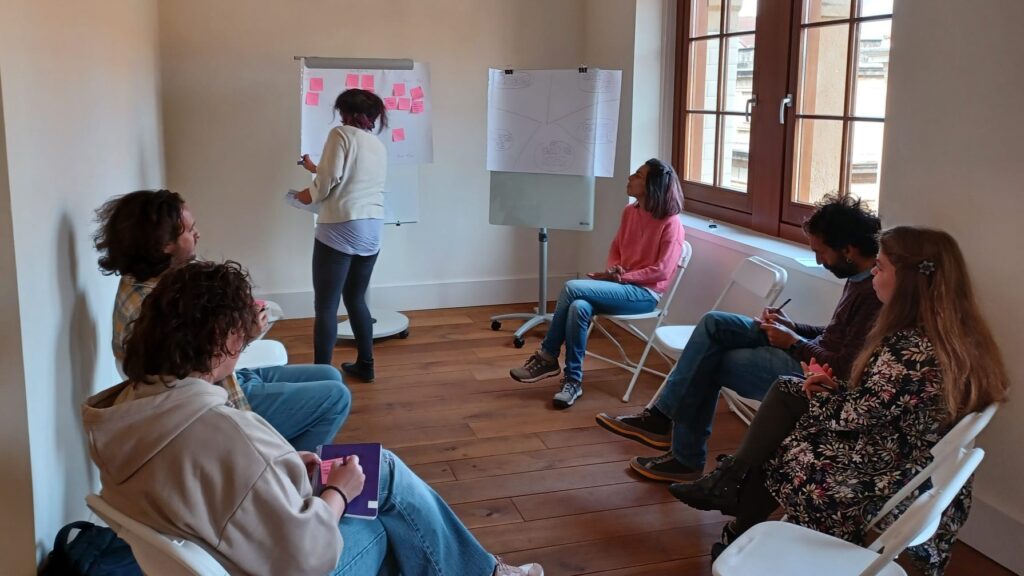
On May 13, the Housing Rights Prevention team in Asturias met to conduct a retrospective of the autonomous exits that have taken place in recent months that show how people who participate in our projects have successfully overcome their processes and gain access to an independent and stable life.
During this session, the team engaged in reflections and conclusions about the program and good practices, areas for improvement and different perspectives on autonomy emerged. "Each advance in this innovation project implies facing new uncertainties, but this is part of the excitement of building something new with creativity and enthusiasm, it is a path in which it is necessary to deconstruct in order to build," explains Pablo García, Socio-educational Support technician of the program in Gijón.
One of the team's outstanding conclusions was the diversity of autonomy options that emerged, as many as there are people and realities. The protagonism of the clients becomes the basis of their work, adopting an approach where people are the true masters of their lives. When participants have the opportunity to take control of their own autonomy, new paths are opened to address homelessness in a comprehensive and sustainable way. In the autonomous exits, both in the project and in the transitional housing, one of the most important aspects has been to explore social capital as a space to find a greater diversity of solutions and to reactivate some social networks that act as resilience factors.
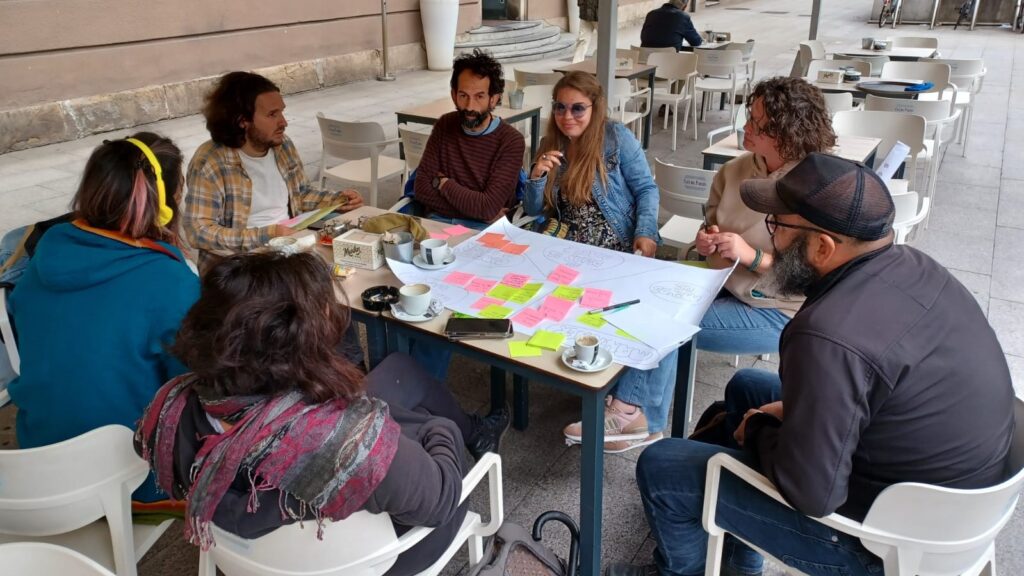
Deinstitutionalization based on people's autonomy and protagonism.
Among the reflections that emerged, it was suggested that "institutionalizing" responses, in addition to undermining the role of clients, have limitations in addressing the problem of homelessness in the medium and long term in people's processes. On the other hand, empowering people and giving them real ownership generates sustainable responses and resources, with the capacity to break the cycle of homelessness in the long term.
In just a few months we have witnessed inspiring stories of people who have found stable employment and settled in another city, putting their social capital to work. Others have decided to return to their home countries in search of new opportunities, while some have gone from living in hostels or transitional apartments to managing their own rent independently. These stories show us that supporting people in their own decisions provides them with opportunities to build new paths to a better future.