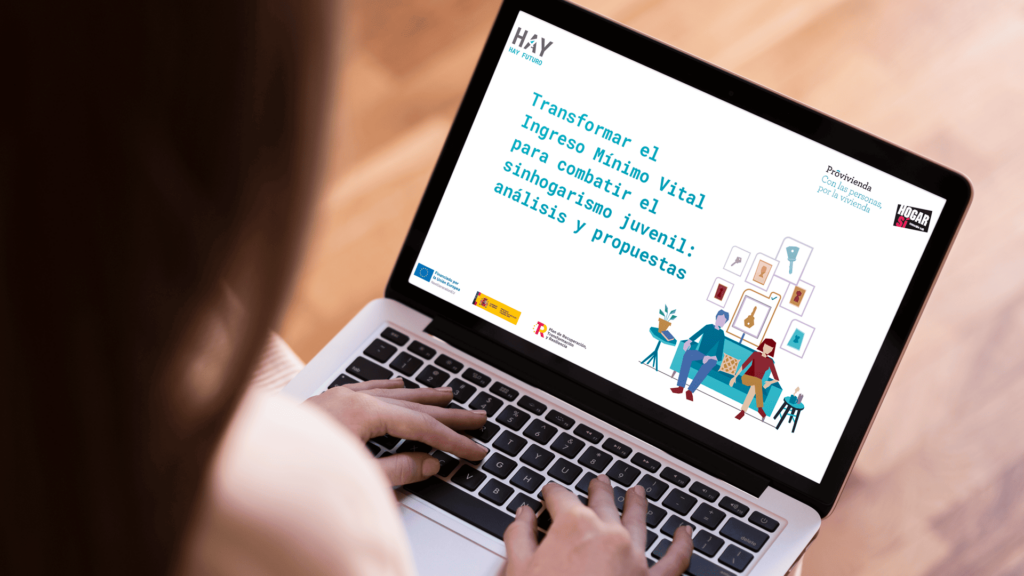
Young people experiencing homelessness often face serious difficulties in accessing tools such as the Minimum Living Income (IMV) or the Minimum Insertion Income (Renta Mínima de Inserción).
Therefore, within the framework of the HOGAR SÍ and Provivienda's H4Y FUTURO social innovation program, financed by the European Next Generation EU funds of the Recovery, Transformation and Resilience Plan, through the Ministry of Social Rights, Consumption and Agenda 2030, a report has been prepared in which these obstacles have been analyzed.
At the same time that problems have been detected, a series of proposals for improvement have also been drawn up that could benefit this population group when it comes to accessing the tools so necessary to improve their quality of life.
Data reinforcing the need for young people experiencing homelessness to have access to the Minimum Living Income
According to data from the latest Homeless People Survey prepared by the National Statistics Institute (INE) in 2022, of the 6,036 people under the age of 30 who are in this same situation, only 1.9% have declared receiving this assistance.
For this reason, the report emphasizes four main points that could favor young people's access to this income:
- Redefine access requirements to improve the coverage rate.
- Streamline processing and reduce denials.
- Increase the amounts.
- Compatibility of the MVI with other assistance.
You can consult the full version of the report "Transforming the Minimum Living Income to combat youth homelessness: analysis and proposals" at this link .